Community Knowledge exchange
From road project to living corridor: learning across scales at Frontiers Brazil
Last week, I had the privilege of presenting at the Royal Academy of Engineering’s Frontiers symposium in Brazil, contributing to a session on ‘community-led circular ecosystems and innovation’.
-
by Andrea
The Frontiers symposium brought together 60 early- and mid-career researchers, innovators and practitioners from more than 20 countries to explore community-led circular solutions for inclusive climate action. What made the experience particularly valuable was the diversity of perspectives in the room: participants came from academia, NGOs, local government, and with a strong representation of women.
Our session explored how circularity is created and sustained at different scales. I kicked off the session with laying the challenge of the impact of regional and trans-national infrastructure on established Indigenous circular economies. Gamuchirai Mutezo gave an inspiring talk on local enterprise and livelihoods in South Africa, including informal workers, decentralised waste valorisation and community-level innovation. Fernanda Scur then capped off our presentations with a focus on multi-stakeholder coordination, including digital platforms, data, public institutions and city-wide circular systems. Together, our talks demonstrated that circular economies are not simply about recycling materials or improving resource efficiency. They are also about who makes decisions, who performs the work, whose knowledge is recognised, who benefits and which systems enable or undermine local agency.
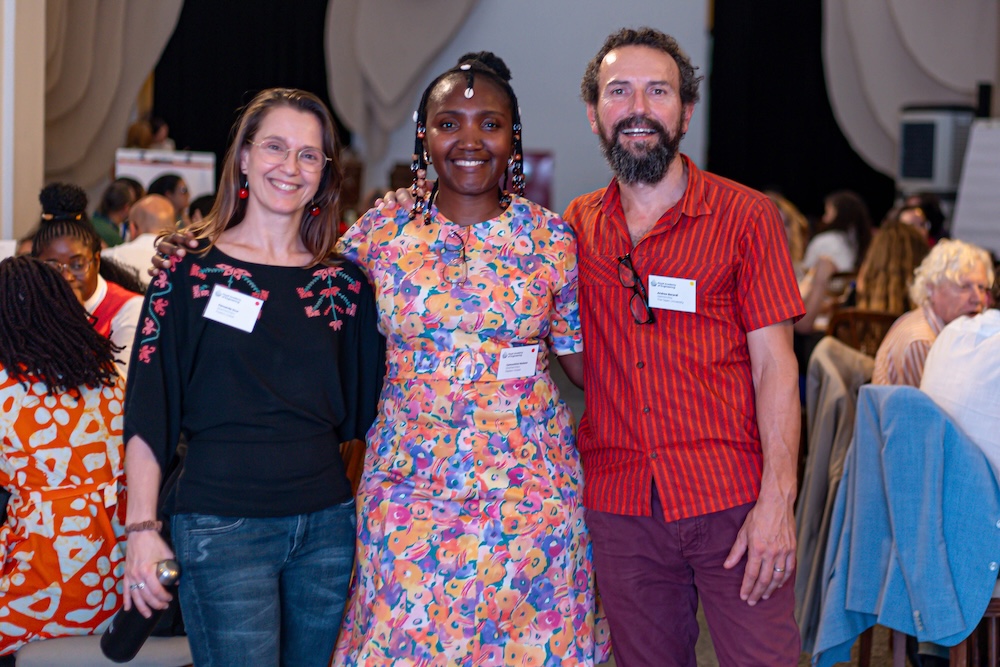 Left to right: Fernanda Scur, Gamuchirai Mutezo and myself, chairs of the session on community-led circular ecosystems and innovation
From road project to living corridor
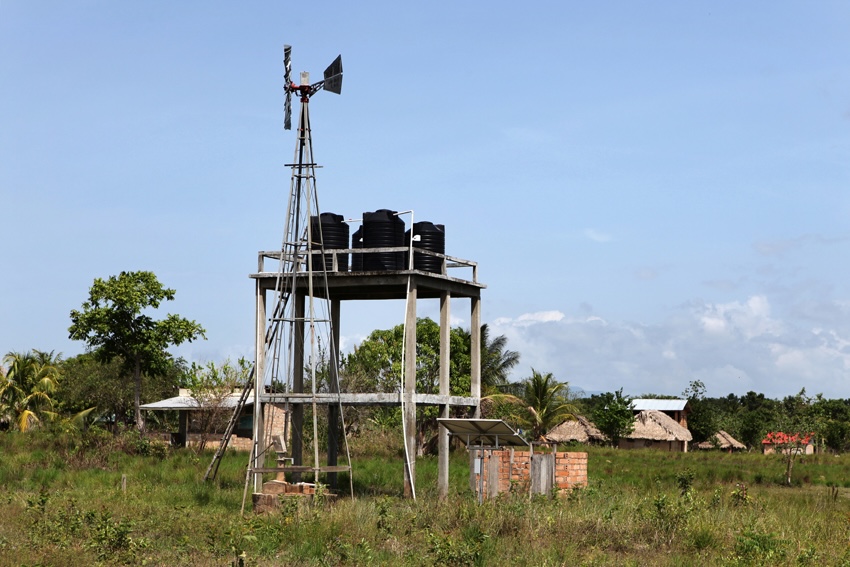
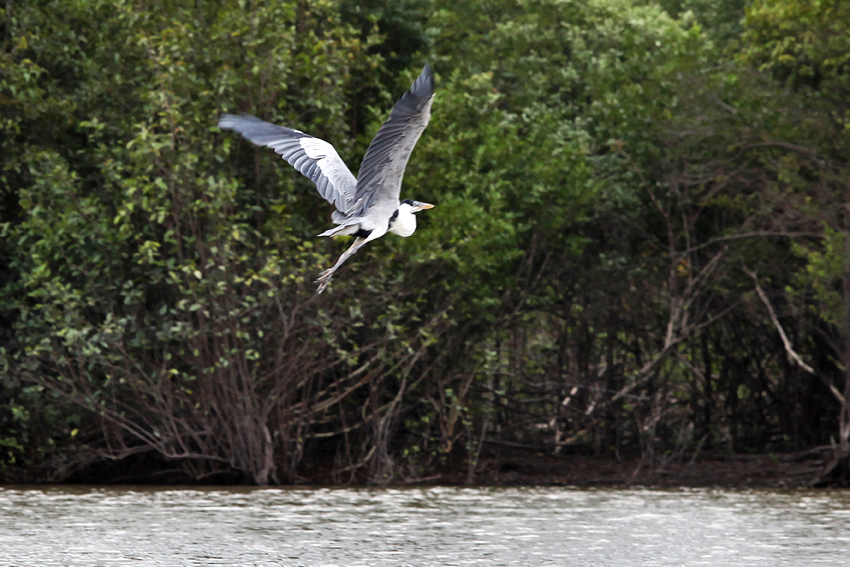
My presentation used Guyana’s proposed Lethem–Georgetown road upgrade as an illustrative case study. The project is intended to improve regional connectivity between landlocked Roraima in northern Brazil and Guyana’s Caribbean-facing gateway. However, the corridor also passes through complex socio-ecological systems, including Indigenous territories, wetlands, rivers, forests and communities whose livelihoods are closely connected to the landscape. The central question was: How can a major trans-national road project connect places without disconnecting people, livelihoods and ecosystems?
A road is often presented as a physical transport asset. But infrastructure is never only physical. Roads, bridges and drainage systems are connected to water, energy, communications, markets, data, skills, finance and governance. They influence who can move, trade, access services, exercise rights and participate in economic opportunities. This means that a road project can support local circular economies by improving access to markets, services and materials. But it can also undermine them if it alters water flows, increases resource pressures, displaces existing enterprises, weakens Indigenous authority or concentrates benefits outside the communities along the corridor.
The challenge, therefore, is not simply to build a more efficient road. It is to co-design a community-led circular climate-resilient corridor that: combines green and grey infrastructure; protects wetlands, rivers and ecological connectivity; maintains the hydrological functions on which livelihoods depend; extends the life of infrastructure through appropriate design and maintenance; retains and recovers material value across the infrastructure life cycle; recognises Indigenous authority, knowledge and territorial governance; strengthens existing local circular economies rather than replacing them; creates opportunities for local skills, enterprise, monitoring and stewardship and; remains resilient to climate, market and governance shocks.
The purpose is not to treat local knowledge, challenges and aspirations simply as another dataset. Participatory approaches can help communities influence the questions being asked, the scenarios being explored and the decisions being made. They can also make visible the assumptions embedded in conventional engineering and planning processes.
Who decides and who benefits?
A recurring theme throughout our session was that participation must mean more than consultation. For a genuinely community-led circular system, we need to ask: who defines the problem? Who has authority over land, territory and knowledge? Who decides what counts as acceptable risk? Who controls data and how it is used? Who operates, repairs and monitors the infrastructure? Who benefits from new jobs, markets and investment? Who bears the risks when things go wrong? What skills and decision-making capacity remain locally after external project teams leave? What financial and governance arrangements support maintenance, restoration and adaptation over time?
These questions are especially important when working with Indigenous communities. Indigenous sovereignty is not simply an additional stakeholder category. It concerns authority, rights, governance, cultural relationships, knowledge systems and the ability to shape collective futures.
Bringing the challenge into the room
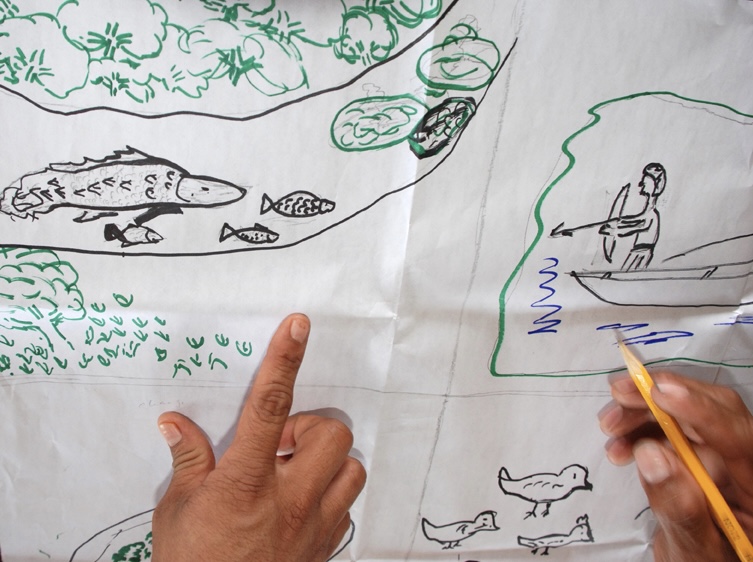
Following the presentations, participants took part in a role-playing activity involving establishing a community-led circular hub located beside a major road corridor. Participants were assigned one of eight roles to represent different community, institutional and technical perspectives. The community roles were deliberately differentiated to highlight that people in ‘the community’ have different priorities, experiences and levels of power and are never a single, unified actor. Participants had to work through disagreements about various things including who would pay for, operate and maintain the hub, who should have decision-making power and how the system would respond to flooding, market disruption or political pressure.
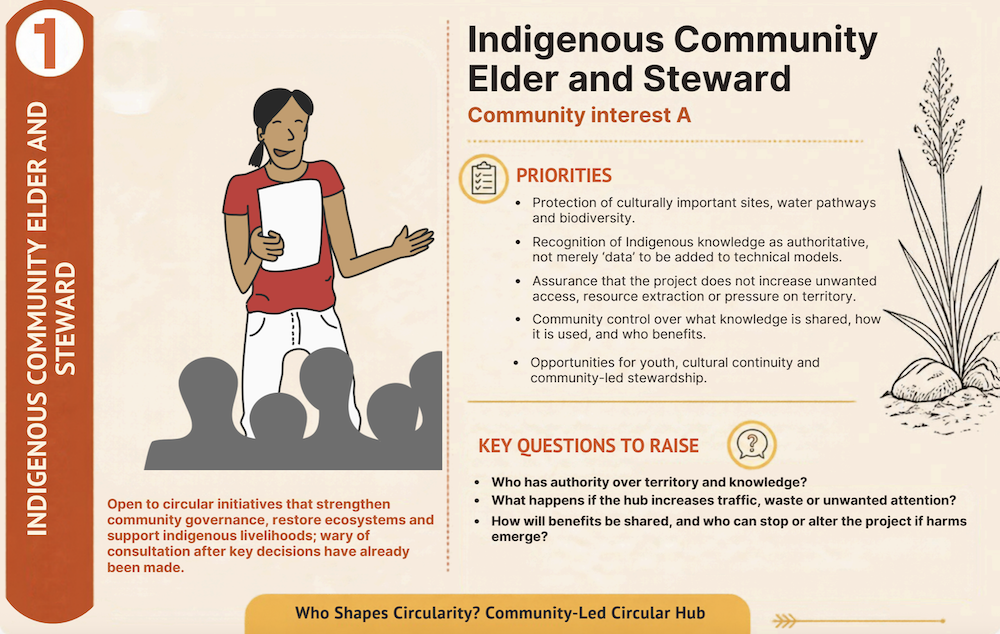 Example of a role-playing card
The discussions produced several important insights. First, local circular economies already exist. They are not necessarily created by external projects, technologies or policies. Communities, informal workers, cooperatives and Indigenous organisations often already recover resources, maintain livelihoods, care for ecosystems and circulate knowledge. Second, infrastructure can either strengthen or weaken these systems. Better roads, energy, water and communications can create opportunities, but they can also increase external pressures, change land values, intensify extraction and make local systems vulnerable to displacement.
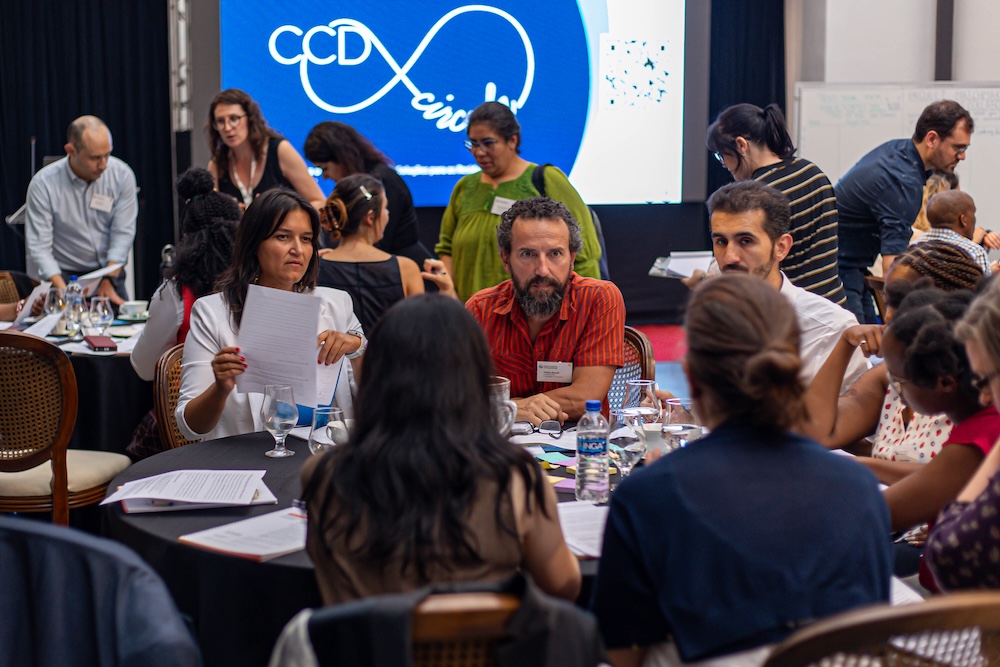 Role-playing discussions
Third, technology follows the local system. A technically sophisticated processing facility or digital platform may fail if the local system cannot operate, maintain, govern or benefit from it. Fourth, coordination matters. Local initiatives need municipal and regional systems that can provide finance, procurement, data, standards, infrastructure and accountability. However, coordination must not become a mechanism for taking control away from the people whose work makes circularity possible. And finally, community-led does not mean community-only. Local actors should not be expected to carry all the operational, financial and climate risks alone. Governments, engineers, funders, municipalities, conservation organisations and technology providers all have important roles - but those roles should support community authority and locally defined priorities.
Reflections for future infrastructure
The road corridor case and the role-playing exercise highlighted a broader challenge for civic engineering. Major infrastructure projects need to be evaluated not only by construction cost, travel time or technical performance, but also by whether they preserve ecological functions, respect Indigenous rights and authority, strengthen local livelihoods, retain value within communities, build local skills and maintenance capacity, distribute benefits and risks fairly, remain adaptable under climate change, and support rather than displace existing circular systems. A community-led circular climate-resilient corridor is not a single piece of infrastructure. It is a living system of relationships among communities, institutions, technologies, materials, water, ecosystems, knowledge and finance. The experience at Frontiers Brazil reinforced the value of creating spaces where participants can move beyond abstract agreement and encounter the real tensions involved in designing such systems. The role-playing exercise worked because it made questions of authority, value, risk and responsibility tangible. Most importantly, it showed that when people are given the opportunity to listen to different perspectives - and to work through difficult trade-offs together - they can generate creative solutions that are both technically imaginative and socially grounded.